How to Improve Typing Speed for BSF HCM Exam (Complete Guide for 2026 Aspirants)
Introduction
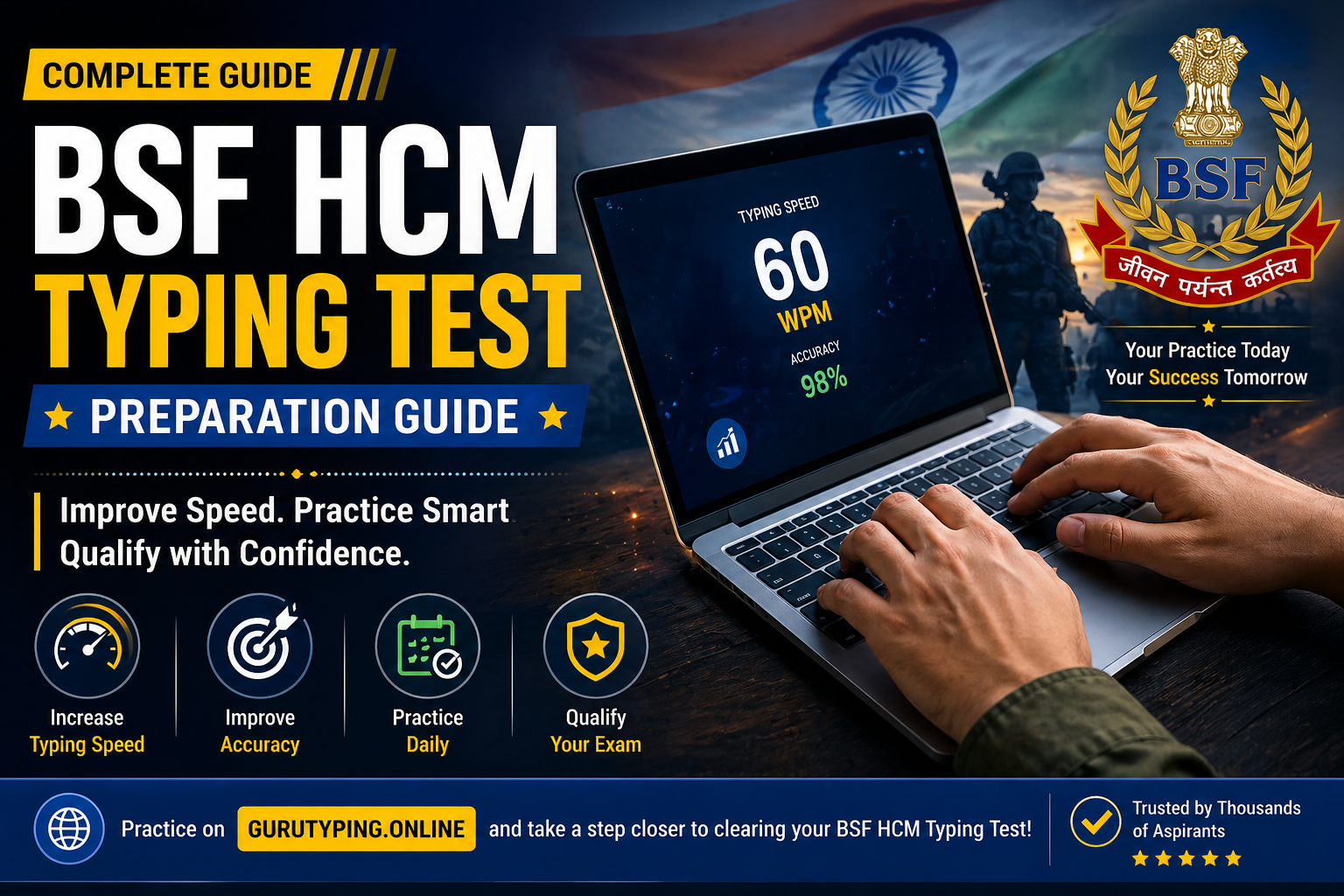
If you're preparing for the BSF HCM (Head Constable Ministerial) exam, one thing is clear—typing is a selection-deciding skill. Many candidates clear the written exam but fail at the typing stage because they underestimate it.
The advantage? Typing is a trainable skill. With the right approach and consistent practice, your speed and accuracy will improve.
BSF HCM Typing Test Requirements
-
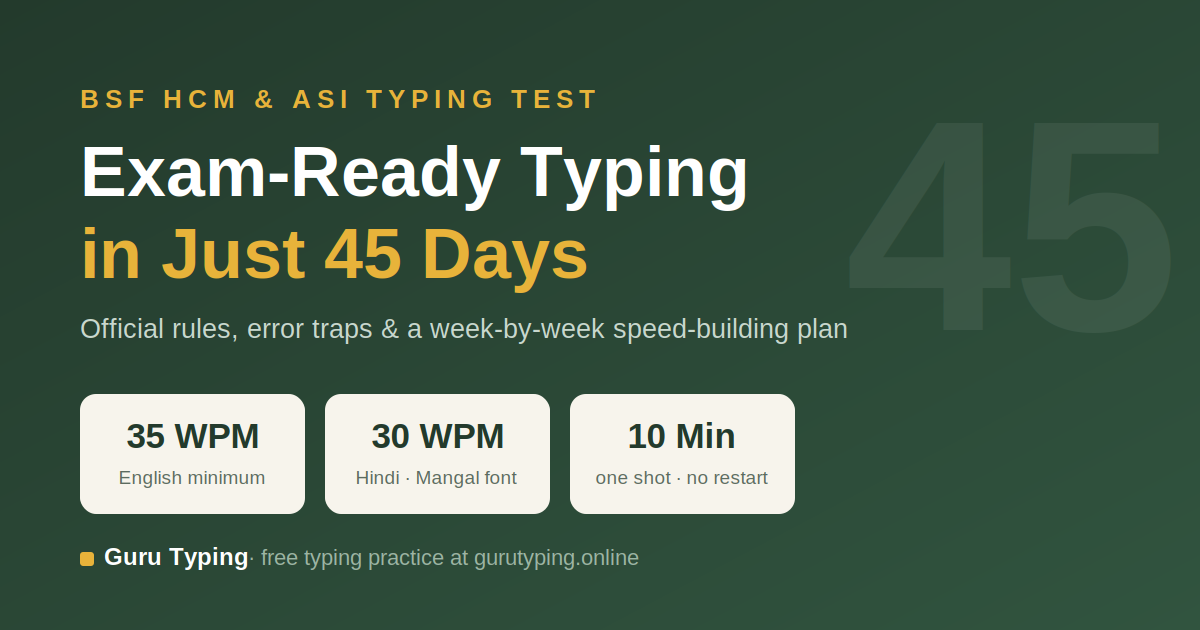
English Typing Speed: 35 WPM
-
Hindi Typing Speed: 30 WPM
Speed matters, but accuracy is equally critical. High error rates can cost you qualification even if your speed is sufficient.
Why Most Candidates Fail the Typing Test
Common issues observed among aspirants:
-
Practicing without tracking mistakes
-
Focusing only on speed instead of accuracy
-
Ignoring real exam conditions
-
Using random typing tools without structure
-
Lack of daily consistency
Fixing these alone can significantly improve your results.
Step-by-Step Strategy to Improve Typing Speed
1. Prioritize Accuracy First
Start with a clear goal:
👉 Maintain 95%+ accuracy
Speed naturally improves once your error rate drops.
2. Practice in Real Exam Conditions
Your practice should match the actual exam:
-
Fixed time limits
-
Realistic paragraph format
-
Proper error calculation
Platforms like gurutyping.online provide exam-based typing environments, which help you adapt faster.
3. Work on Weak Words (High-Impact Method)
Instead of repeating random passages:
-
Identify frequently mistyped words
-
Practice them separately
On gurutyping.online, an AI-based feature tracks your mistakes and generates custom tests based on your weak areas.
4. Maintain Proper Finger Placement
Even experienced typists should reinforce basics:
-
Keep fingers on the home row (ASDF / JKL;)
-
Avoid looking at the keyboard
-
Use all fingers efficiently
Incorrect habits limit long-term speed growth.
5. Stay Consistent
Typing is muscle memory. Irregular practice leads to regression.
👉 Daily practice is non-negotiable.
How Much Should You Practice Daily?
A realistic plan based on your level:
Beginner
-
45–60 minutes/day
-
Focus: accuracy and finger control
Intermediate
-
60–90 minutes/day
-
Focus: speed + consistency
Advanced (Pre-exam)
-
90–120 minutes/day
-
Focus: full mock tests and performance tracking
Ideal Daily Practice Structure
Follow this structured routine:
-
Warm-up test (5–10 minutes)
-
Accuracy-focused test (15–20 minutes)
-
Speed test (15–20 minutes)
-
Weak words practice (15 minutes)
-
Full mock test (15–20 minutes)
This ensures balanced improvement across all areas.
7 Proven Tips to Crack BSF HCM Typing Test
-
Never compromise on accuracy
-
Practice daily without gaps
-
Use exam-based typing tests
-
Analyze mistakes after every session
-
Improve weak words separately
-
Avoid looking at the keyboard
-
Stay calm during the test
Why You Should Practice on GuruTyping
If you’re serious about selection, your practice platform matters.
gurutyping.online offers:
-
Exam-specific typing tests (BSF, SSC, etc.)
-
AI-based mistake tracking
-
Custom tests based on your weak words
-
Real exam simulation
-
Performance analytics dashboard
👉 Practice smarter on gurutyping.online
Final Words
Clearing the BSF HCM typing test is not about talent—it’s about strategy, consistency, and the right practice system.
Follow a structured plan, track your progress, and practice daily. Reaching 35 WPM with high accuracy is achievable.
Start today and stay consistent.
FAQs
Q1. Can I clear the typing test in 30 days?
Yes, with disciplined daily practice and the right strategy.
Q2. What matters more—speed or accuracy?
Accuracy comes first. Speed follows naturally.
Q3. Is mobile typing useful for preparation?
No. Always practice on a keyboard to match exam conditions.
Turn typing into your strongest scoring advantage.
Related Articles